Treating Middle‑of‑the‑Night Waking: CBT, Medicines and NHS Options in the UK
Treating middle‑of‑the‑night waking in the UK

If waking at 3am is frequent or leaves you exhausted, an evidence‑based treatment plan will help. This post covers NHS pathways, CBT for insomnia, medication considerations, and how to create a clinician‑ready sleep history.
How doctors assess sleep problems
Clinicians start with a sleep history: typical bedtime/wake time, sleep latency, number/duration of awakenings, daytime symptoms, caffeine and alcohol use, medications, and mental health screening. Simple questionnaires such as the Insomnia Severity Index (ISI) may be used. For suspected sleep apnoea or RLS, GPs refer to sleep clinics.
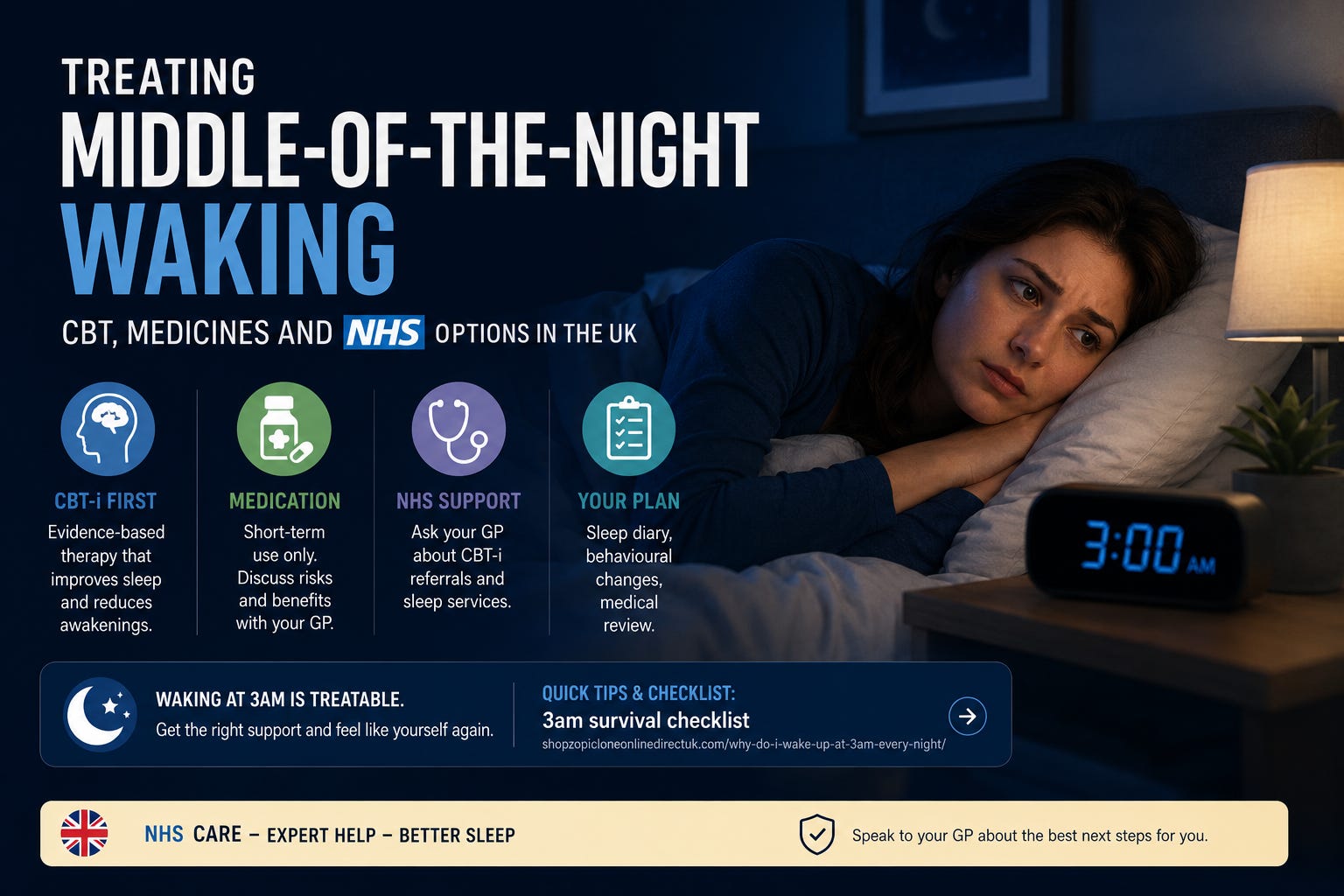
First‑line therapy: CBT for insomnia (CBT‑i)
What CBT‑i includes
CBT‑i addresses the behavioural and cognitive factors that maintain insomnia: stimulus control (associating bed with sleep), sleep restriction (temporary tightening of time in bed), cognitive restructuring (challenging unhelpful beliefs), and relaxation training.
Evidence and NHS guidance
CBT‑i is recommended as the first‑line treatment by many NHS services and clinical guidelines because it reduces awakenings, improves sleep efficiency, and has lasting benefits beyond the therapy course.
How to access CBT‑i in the UK
Ask your GP for referral to NHS Talking Therapies or sleep services. Waiting lists vary; digital CBT programmes (for example, Sleepio or Sleepstation) are available and used by many NHS trusts.
When medication is considered
Short‑term use only
NHS guidance typically limits hypnotic sleeping tablets to short courses for acute insomnia. Medicines such as benzodiazepine‑like drugs may help short term but carry risks (dependence, daytime sedation, cognitive effects).
Alternatives and cautions
Low‑dose sedating antidepressants or melatonin may be considered in specific populations (melatonin under GP supervision, especially for circadian disorders). Always review risks and interactions with your GP or pharmacist.
Medical causes worth ruling out
Sleep apnoea (loud snoring, gasping, daytime sleepiness)
Restless legs syndrome (uncomfortable limb sensations worse at rest)
Thyroid dysfunction, chronic pain, depression/anxiety, and menopause
A practical clinician‑ready plan you can follow
Keep a sleep diary for 2–4 weeks.
Try behavioural changes (sleep schedule, reduce alcohol) for a few weeks.
If no improvement, book a GP appointment and bring your sleep diary.
Ask about CBT‑i referral and discuss short‑term medication only if necessary.
Anchor to your deeper guide
For quick at‑home tips and a survival checklist, link this anchor text to your article: “3am survival checklist” → [https://shopzopicloneonlinedirectuk.com/why-do-i-wake-up-at-3am-every-night/]
FAQs
Is CBT‑i available on the NHS?
Yes. Ask your GP; digital options may be quicker.
How quickly does CBT‑i work?
Many people see benefits within 4–8 weeks.
Are over‑the‑counter sleepers safe?
Evidence is limited; antihistamines can cause daytime drowsiness and tolerance.
Can I be prescribed long‑term sleeping tablets?
Long‑term use is generally discouraged; GPs favour short courses plus CBT‑i.
What questions should I bring to my GP?
Bring a sleep diary, list of medicines, and notes on daytime function, snoring, and menopausal symptoms.
Conclusion
Effective treatment of night‑time awakenings usually combines behavioural change, CBT‑i and targeted medical review. Start with a sleep diary and speak to your GP about accessing NHS CBT‑i before considering long‑term medication.